Modelling levels for actor activity:
3. Implementation level
Mental model and mental representation correspond to a qualitative modelling that makes sense mainly for the actor but need to be implemented to be confront to the environment and shared with others. The CxG formalism allows a uniform representation of knowledge, reasoning and context for describing an activity as a process, not as object (Brézillon, 2023). A contextual element is implemented as a pair of contextual and recombination nodes (Brézillon et al. 2000). This definition has a deep impact on the power of the CxG formalism. Figure 1 shows the four components of the CxG formalism that are action, contextual element, activity, and Executive Structure of Independent Activities (ESIA).
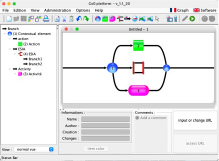
Figure 1 Components of CxG formalism in the CxG software
An action (the green square) is the elementary component of the activity. Contextual elements (the blue circles) are described just below. An activity (pink elongated oval) is a contextual subgraph that may appear on several paths in the global contextual graph or introduced by the actor for different types of knowledge. An ESIA (the vertical red bars) avoids the introduction of an artificial complexity in the representation for a local goal. The order for executing independent activities in an ESIA does not matter (activities can be executed in parallel too), but both independent activities must be executed before to continue the crossing of the contextual graph. An ESIA also is assimilated to as a building block of the CxG formalism, like an action or an activity, because its content is isolated of the rest of the activity described in the contextual graph. Note that we will not use activity and ESIA in the example given hereafter.
CxG software is currently written in Java under GNU Public License and contextual graphs are stored in XML for a reuse in other applications. Software design and development was user-centred for an intuitive use by nonspecialists in computer science and mathematics (see Brézillon (to appear) for an extended presentation). A contextual graph integrates mental models because two mental models generally differ by only different instantiations of an existing contextual element that do not affect the structure of the contextual graph, or by an additional contextual element in one mental model by simple accommodation.
The implementation of a contextual element as a pair of contextual and recombination nodes in the contextual graph offers functions that enlarge the operational nature of the modelling:
· There are as many exclusive branches between a pair of nodes as instantiations of the contextual element.
· Instantiations are provided from sources of context at the environment level.
· Each branch corresponds to an expression of the reasoning step associated with the instantiation and makes the mental model unique.
· contextual elements and instantiations must be managed separately.
· Two contextual elements are either independent or one is on a branch of the other. it gives to contextual graphs a series-parallel structure.